
Air conditioning repair& installation services.
Rely on our certified technicians for prompt AC repairs, efficient new system installations, and annual maintenance. We engineer comfort with precision across Lorton, Alexandria, and Springfield, VA.
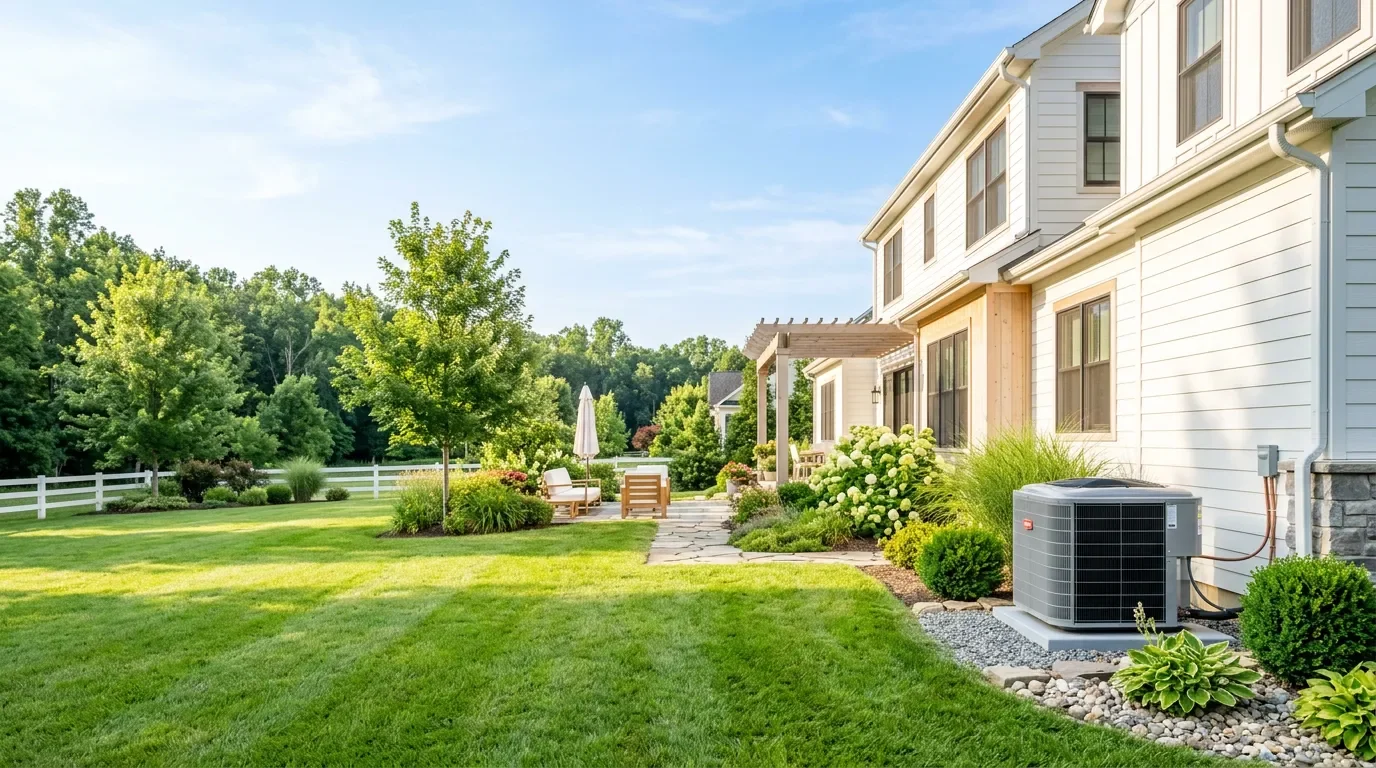 Condenser service, Springfield backyard
Every cooling problem has a precise fix
Our NATE-certified technicians repair, install, and maintain all cooling system makes and models.
AC Repairs
Experiencing warm air, short-cycles, or loud noises? Our technicians arrive in fully stocked trucks to provide immediate fixes with flat-rate pricing.
AC Installation
High-efficiency Bryant cooling systems sized with a Manual J load calculation — matched to your home’s layout, not just its square footage.
AC Maintenance
Spring tune-ups that catch failing capacitors, dirty coils, and refrigerant drift before the first heatwave finds them for you.
Cooling problems we diagnose every summer
Air conditioning problems tend to show up in patterns. A system that blows room-temperature air may have a compressor issue, a failed capacitor, a dirty outdoor coil, a refrigerant problem, or a thermostat that is not calling correctly. A system that cools downstairs but not upstairs may be moving too little air, losing air through duct leakage, or short cycling before it removes humidity. A system that leaves water around the indoor unit may have a clogged condensate drain, cracked pan, blocked trap, or frozen evaporator coil thawing into the cabinet.
The first clue is usually how the system fails
A sudden failure after a click or hum often points toward electrical starting components. A slow decline over several weeks may point toward a coil, airflow, refrigerant, or duct issue. Ice on the suction line or indoor coil is not a sign that the system is "extra cold." It usually means the evaporator temperature has fallen below freezing because airflow is too low or refrigerant conditions are wrong. Running the system while it is frozen can send liquid refrigerant back toward the compressor, which is not a risk worth taking.
Northern Virginia humidity makes AC diagnostics more important. When outdoor dew points sit in the 70s, the air conditioner has to remove water vapor as well as heat. A right-sized system runs long enough for moisture to condense on the evaporator coil and drain away. If the system is oversized, undercharged, dirty, or starved for return air, the home may reach the thermostat setpoint while still feeling damp.
What the AC diagnostic process measures
Confirm the call for cooling.
The technician verifies thermostat settings, control voltage, safety switches, and whether the indoor and outdoor equipment are responding correctly.
Check airflow before refrigerant assumptions.
Filter condition, blower operation, static pressure, coil cleanliness, and return-air restrictions are checked because low airflow can look like a refrigerant problem from the homeowner's side of the room.
Test electrical components.
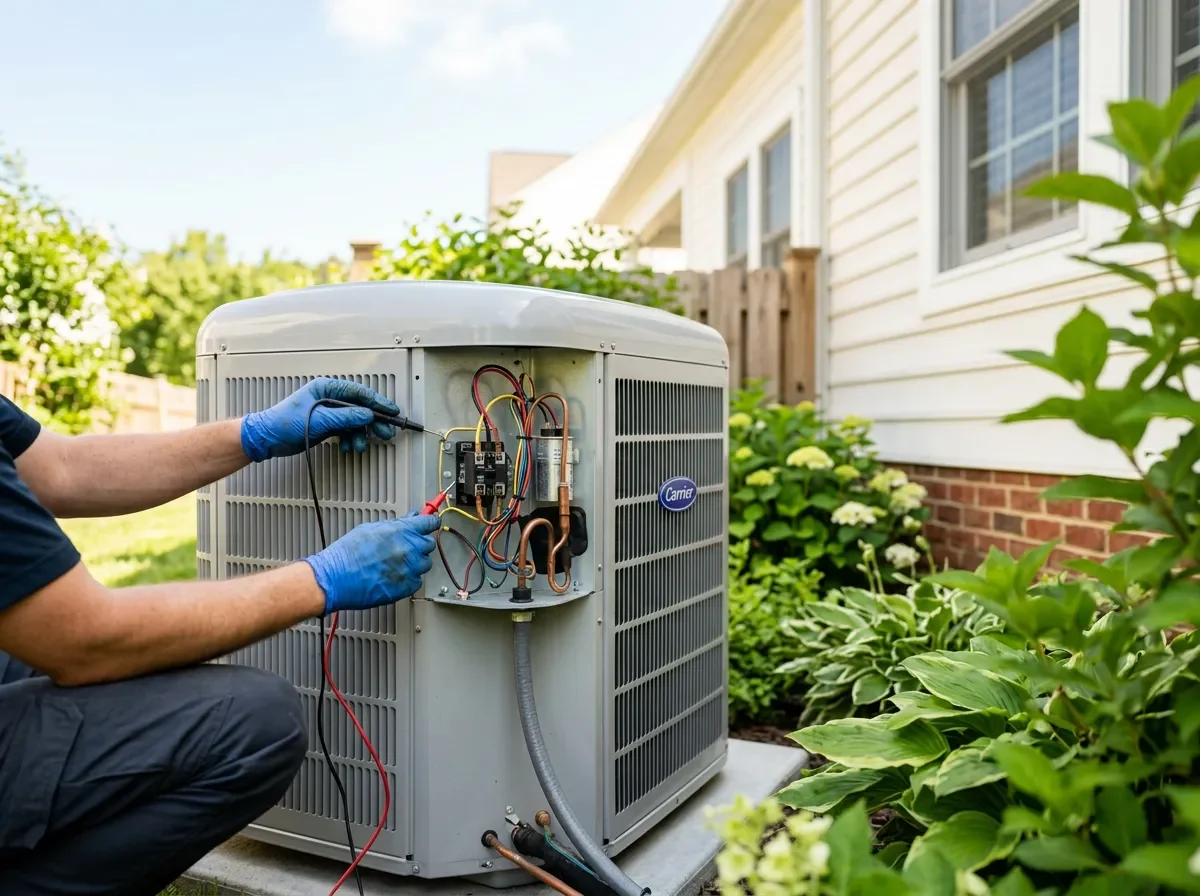
Capacitors, contactors, disconnects, compressor terminals, condenser fan motors, blower motors, and amp draws are compared against ratings and manufacturer tolerances.
Evaluate refrigerant behavior.
Suction and liquid pressures, line temperatures, superheat, and subcooling are used as appropriate for the metering device. Refrigerant is never treated as something to "top off" without a reason.
Inspect condensate management.
The drain pan, trap, float switch, condensate pump if present, and drain line are checked for clogs or poor slope. Humid summers make this a common failure point.
Run the system after correction.
A repair is not complete until the equipment runs under load and the temperature split, airflow behavior, and controls make sense.
AC symptoms and what they usually mean
Use this guide to describe what you see. It is not a substitute for testing.
| Symptom | Possible Causes | What Not to Do |
|---|---|---|
| Outdoor unit hums but fan does not spin | Weak capacitor, failed fan motor, stuck contactor, wiring issue | Do not keep forcing the system to start from the thermostat. |
| Indoor blower runs but air is warm | Outdoor unit off, compressor fault, refrigerant issue, thermostat or control problem | Do not assume refrigerant is low without a leak check and readings. |
| Ice on refrigerant line or indoor coil | Dirty filter, low airflow, dirty coil, low refrigerant charge, blower problem | Turn cooling off and let the ice thaw before a technician arrives. |
| Water near furnace or air handler | Clogged drain, cracked pan, frozen coil thawing, failed pump, missing trap | Do not ignore it; ceiling and flooring damage can happen quickly. |
| AC short cycles | Oversized equipment, dirty coil, high pressure, low refrigerant, thermostat location, control issue | Do not lower the thermostat repeatedly to force longer cooling. |
| Rooms cool unevenly | Duct leakage, balancing issue, closed dampers, undersized return, sun load, poor insulation | Do not replace equipment before airflow is measured. |
| Breaker trips | Compressor fault, motor short, loose electrical connection, failed capacitor, grounded winding | Do not reset the breaker over and over. |
| Musty smell at startup | Wet coil, dirty drain pan, microbial growth, poor filtration, long fan-off periods | Do not cover the smell with sprays inside the return grille. |
Choosing the right cooling efficiency
SEER (Seasonal Energy Efficiency Ratio) measures how much energy a system uses to cool your home. Higher ratings mean better performance, lower running costs, and lower environmental impact — but the right rating depends on your ductwork, insulation, and how long you plan to stay in the home.
We prepare a written comparison across efficiency tiers so you can see the payback math before you choose.
Refrigerant note: starting in 2025, new equipment transitions to R-454B under EPA AIM Act regulations, with 78% lower global warming potential. Read our R-454B guide.
Cooling installation built around humidity
A Virginia air conditioner has two jobs: lower the dry-bulb temperature and remove moisture. Sensible cooling is the temperature drop you see on the thermostat. Latent cooling is moisture removal. In Fairfax County summers, latent cooling matters because humid air can feel uncomfortable even when the thermostat reads 74 degrees.
Why bigger equipment can make the house feel worse
An oversized air conditioner satisfies the thermostat quickly and shuts off before enough moisture condenses on the evaporator coil. The result is a cool but clammy home, especially on rainy summer days when sensible load is lower but humidity remains high. Short cycles also increase wear because compressors and motors are stressed most at startup.
Our cooling replacements begin with a Manual J load calculation, then equipment selection through Manual S principles. We look at window exposure, insulation, attic conditions, duct location, return-air capacity, household occupancy, and the way the rooms are used. The goal is not the largest Bryant system the panel can support. The goal is the system that runs at the right capacity, moves the right airflow, controls humidity, and meets SEER2 requirements for this region.
Variable-speed and two-stage equipment can help because they run longer at lower capacity during mild or humid conditions. That longer runtime improves filtration and dehumidification while reducing temperature swings. It also pairs well with zoning when a duct design can support it, because the equipment can reduce output instead of forcing full airflow through one small zone.
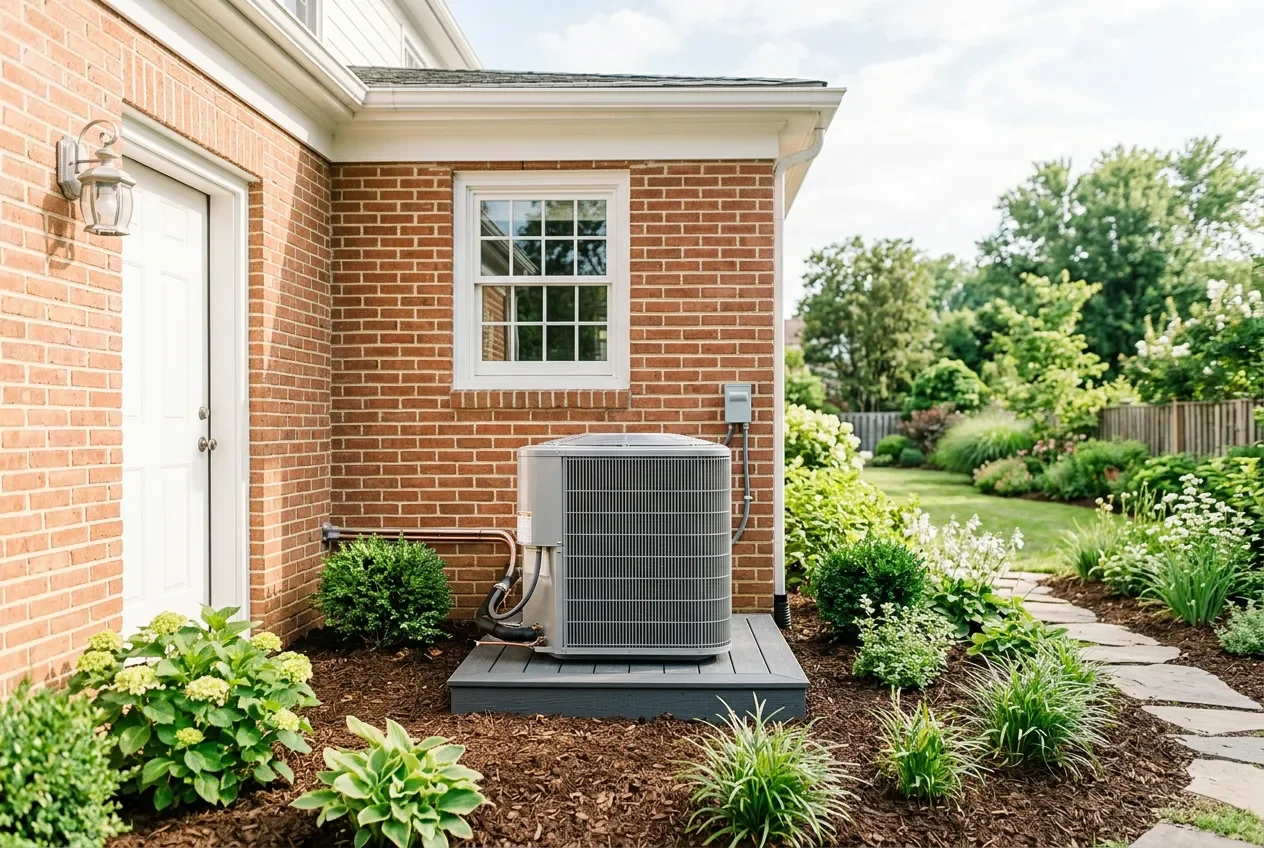
Replacing only the outdoor condenser while leaving an old indoor coil can prevent the system from reaching its rated SEER2 performance and may create refrigerant, airflow, or warranty problems. A proper replacement proposal should identify the matched indoor coil, outdoor unit, metering device, thermostat requirements, and AHRI-rated combination where efficiency claims are made. It should also explain condensate protection, pad condition, service clearance, and thermostat setup. Those details prevent avoidable callbacks later during commissioning.
Commissioning checklist for a new cooling system
A new AC installation should be tested as a working system, not treated as finished when the equipment is set in place.
- Load and equipment match: Manual J findings are compared with Bryant equipment capacity so the system fits the house.
- AHRI-rated combination: The indoor coil and outdoor unit are checked as a matched combination when efficiency ratings are part of the proposal.
- Duct static pressure: Total external static pressure is measured to confirm the blower can move required airflow.
- Refrigerant charge: Charge is weighed in or adjusted according to manufacturer procedures, then verified with operating measurements.
- Condensate drainage: The pan, trap, float switch, and drain route are checked for slope and protection.
- Electrical setup: Breakers, disconnects, whip, contactor, capacitors, wiring, and grounding are verified for the equipment.
- Thermostat programming: The control is set for the correct equipment type, staging, fan behavior, and homeowner schedule.
- Outdoor unit placement: Clearance, pad level, airflow around the condenser, and service access are reviewed.
- Startup documentation: Temperatures, pressures, amp draws, model numbers, and serial numbers are recorded.
- Warranty registration: Bryant equipment is registered within ninety days so eligible systems receive the ten-year parts warranty.
Duct leakage can make a new AC look weak
Duct leakage is one of the most common reasons a cooling system underperforms even when the equipment is mechanically sound. Supply leaks waste cold air before it reaches the room. Return leaks can pull hot, humid, dusty air from an attic, crawl space, basement, or wall cavity into the system. In cooling season, that extra humidity increases latent load and makes the air conditioner work harder.
Replacement is the right time to look
When a new AC is being installed, the duct system should be evaluated because the equipment will only perform as well as the air path allows. Static pressure gives one clue. Room temperature differences give another. Dust streaks around registers, noisy returns, crushed flex duct, and rooms that never get enough airflow all point toward distribution problems. If the old system failed to keep one side of the house comfortable, matching the old tonnage without checking ducts may repeat the same complaint with newer equipment.
This is also where SEER2 ratings meet reality. The rating assumes the system can move rated airflow under test conditions. If duct leakage or restriction prevents that, the homeowner pays for efficiency that the house cannot use. A good AC proposal should explain the equipment and the air delivery path together.
The physics of air conditioning & heat transfer
Air conditioners do not create cold air. Instead, they extract heat from inside your home and transfer it outside. Refrigerant absorbs indoor heat at the evaporator coil, is compressed to raise its temperature above the outdoor air, and releases that heat at the condenser — a continuous loop engineered around pressure and temperature differentials.
That’s why airflow and refrigerant charge matter as much as equipment size: a system with a dirty coil or a low charge can’t move heat efficiently no matter how new it is. It runs longer, costs more, and cools less — the exact symptoms most homeowners describe when they call us in July.
R-454B and AC replacement timing
Starting in 2025, new residential air conditioners and heat pumps manufactured for the U.S. market moved away from R-410A and toward lower-GWP refrigerants such as R-454B. R-454B is classified A2L, meaning mildly flammable under specific conditions. The classification changes installation and safety requirements, but it does not make the equipment unusual to live with when installed correctly.
R-454B systems are designed as matched sets. Leak detection, control responses, refrigerant charge procedures, and component compatibility are part of the design. An older R-410A system cannot be converted to R-454B by changing refrigerant. Compressors, metering devices, oils, controls, and pressure behavior are different enough that retrofitting is unsafe and damaging.
For homeowners, the practical decision is simple. A healthy R-410A system can be maintained and repaired. A leaking, aging, or compressor-failed system may be better replaced with modern R-454B equipment instead of putting major money into an older platform. We explain that choice using equipment age, leak location, repair scope, efficiency, warranty coverage, and the homeowner's plans for the house.
AC service FAQ
Yes. Turn cooling off at the thermostat and let the fan run only if it can move air without making the situation worse. Ice has to thaw before readings make sense. A frozen coil often points to restricted airflow, dirty equipment, blower trouble, or refrigerant problems.
Cooling equipment should be checked before summer. The Energy Saver Agreement includes a spring cooling tune-up and a fall heating inspection, along with priority scheduling and a 15% repair discount. Spring service is timed to catch weak electrical parts, drain issues, and dirty coils before peak heat.
The right SEER2 level depends on duct condition, budget, comfort goals, expected time in the home, and rebate eligibility. Higher efficiency can lower operating cost, but only if airflow, equipment matching, and installation quality support the rating. We compare tiers in writing before replacement.
Need immediate assistance?
Our technicians are standing by 24/7 for emergency repairs in Northern Virginia. Get the premium climate engineering your home deserves.