
Our Northern Virginiaservice areas.
We provide reliable heating and air conditioning services directly to your neighborhood in Fairfax County and surrounding areas. Our technicians live and work in the community, allowing us to respond quickly.
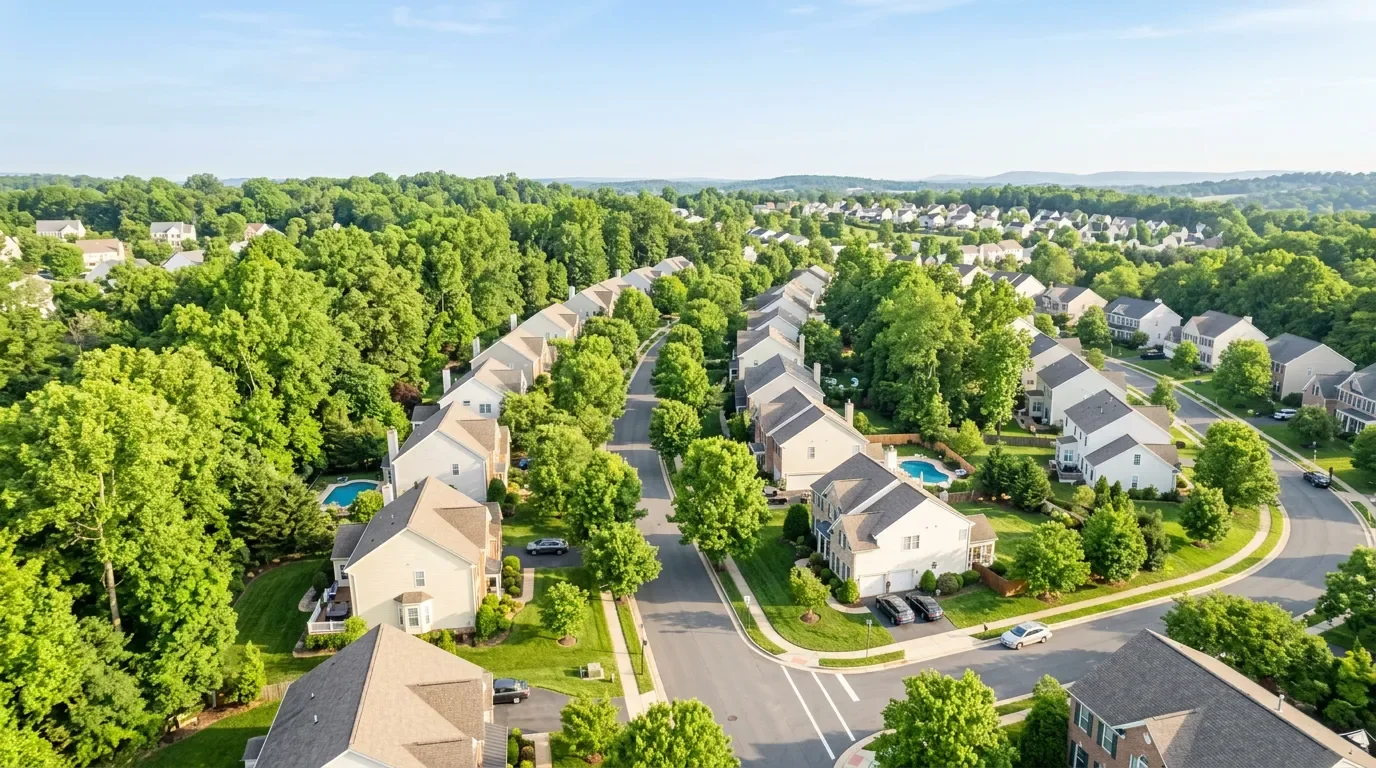 Southern Fairfax County from above
Fast response across Southern Fairfax County
We regularly dispatch technicians to residential and commercial properties in the following Northern Virginia locations.
Also serving Clifton (20124) and nearby communities — if you don’t see your neighborhood, call (703) 436-8028 and we’ll tell you honestly whether we cover it.
A service area built around practical coverage
Commonwealth Cooling & Heating is based at 8190 Terminal Rd, Lorton, VA 22079, and the service area is organized around the communities we can serve responsibly from that base. The published coverage includes Lorton, Alexandria, Springfield, Fairfax, Burke, Newington, Mount Vernon, Kingstowne, Burke 22015, and Clifton 20124. Those locations share a regional climate, but the homes are different enough that HVAC service should not be treated as one script.
Same county, different houses
In Lorton, outdoor equipment may be affected by marine clay soils that shift with moisture and can tilt condenser pads. In Alexandria, older homes in Old Town and Del Ray often have plaster walls and no mechanical chases, so duct design and equipment access require care. In Springfield, split-level and split-foyer homes create temperature imbalance because warm air rises through stacked living levels. Burke and Newington include many established neighborhoods where older ductwork may not match modern equipment capacity. Mount Vernon and Kingstowne add their own mix of townhomes, single-family homes, and multi-level layouts.
That local variety is why we measure rather than assume. A service call may focus on a failed part, but a replacement conversation has to include Manual J load calculation, duct static pressure, electrical capacity, venting, condensate disposal, equipment clearance, and permit requirements. The town name helps us anticipate patterns. The measurements decide the recommendation.
Coverage snapshot
Each community brings different housing patterns and service questions.
| Area | Local HVAC Pattern | Common Service Focus |
|---|---|---|
| Lorton, VA 22079 | Lorton Station, Laurel Hill, Mason Neck, Gunston, and homes near the Workhouse Arts Center include varied ages and layouts. | Outdoor pad stability, heat pump replacement, maintenance, and duct checks in mixed housing stock. |
| Alexandria, VA | Old Town and Del Ray include pre-1940 rowhouses, plaster walls, and limited mechanical chases. | Historic-home comfort, ductless or compact duct options, careful routing, and humidity control. |
| Springfield, VA | 22150, 22151, 22152, and 22153 include split-levels, West Springfield, Saratoga, and Kings Park. | Zoning, airflow balancing, hot upstairs rooms, and multi-level thermostat strategy. |
| Fairfax, VA | A broad mix of home ages and system types. | Replacement planning, permit handling, duct review, and efficiency comparisons. |
| Burke, VA and Burke 22015 | Established homes with aging ductwork and replacement-aged equipment. | Repair-versus-replace decisions and Energy Saver Agreement maintenance. |
| Newington, VA | Close to the Lorton base with varied residential system types. | AC repair, furnace service, heat pumps, and indoor air quality. |
| Mount Vernon, VA | Older and newer homes with humid summer comfort concerns. | AC sizing, dehumidification, duct leakage, and filter selection. |
| Kingstowne, VA | Townhomes and multi-level homes with room-by-room comfort differences. | Heat pump service, zoning questions, and smart thermostat setup. |
| Clifton 20124 | Larger lots and varied equipment locations. | Replacement planning, access considerations, and maintenance scheduling. |
Light commercial service in the same footprint
Commonwealth also provides light commercial HVAC service for retail spaces, offices, and residential complexes throughout the service area. Light commercial work still depends on the same fundamentals: safe electrical operation, clean coils, correct refrigerant behavior, proper airflow, clear condensate drainage, and controls that match the occupied schedule.
The main difference is use pattern. A small office may have long occupied hours and more internal heat from people and electronics. A retail space may have doors opening frequently and uneven solar load from storefront glass. A residential complex may need maintenance coordination and clear access planning. The service area matters here too, because a contractor familiar with nearby roads, building types, and county requirements can plan the visit more realistically.
Close by, stocked up, and on time
By focusing our service area on Southern Fairfax County, we keep travel times short and arrival windows reliable. Our trucks are stocked with common parts to resolve issues on the first visit.
- No travel fees. No hidden charges for any location inside our service area.
- Weekend emergencies covered. 24/7 emergency repair service, including weekends.
- Light commercial too. Retail spaces, offices, and residential complexes throughout our service area.
No hidden fees. Every address inside our published service area pays the same flat-rate pricing — travel is on us.
Yes, we offer 24/7 emergency repair services — including weekends and holidays, when systems seem to pick their moments.
Yes, we provide light commercial HVAC services for retail spaces, offices, and residential complexes throughout our service area.
Fairfax County climate shapes the work
Fairfax County gives HVAC equipment a full range of stress. Summers are hot and humid, with about 36 days per year above 90 degrees and dew points that often reach the 70s. The summer design temperature is about 93 degrees. Winters are not northern-Maine cold, but they are cold enough to expose weak heat pumps, poor defrost control, and undersized heating systems. Local winter design temperatures are roughly 17 to 22 degrees.
Humidity is the hidden load
The thermostat measures temperature, but the body feels moisture. A home can read 74 degrees and still feel uncomfortable if the air conditioner is not removing enough latent heat. That is why system sizing matters in this region. Oversized cooling equipment can shut off too quickly, leaving humidity behind. Restricted airflow can freeze coils. Leaky ducts can pull attic, crawl-space, or wall-cavity air into the system and make indoor air quality worse.
Heating design has its own local considerations. Heat pumps lose capacity as outdoor temperature drops, so balance point and auxiliary heat setup matter. Gas furnaces need correct venting, combustion, temperature rise, and heat exchanger safety checks. Dual-fuel systems can work well here because the heat pump can handle mild weather efficiently while the gas furnace takes over during colder periods.
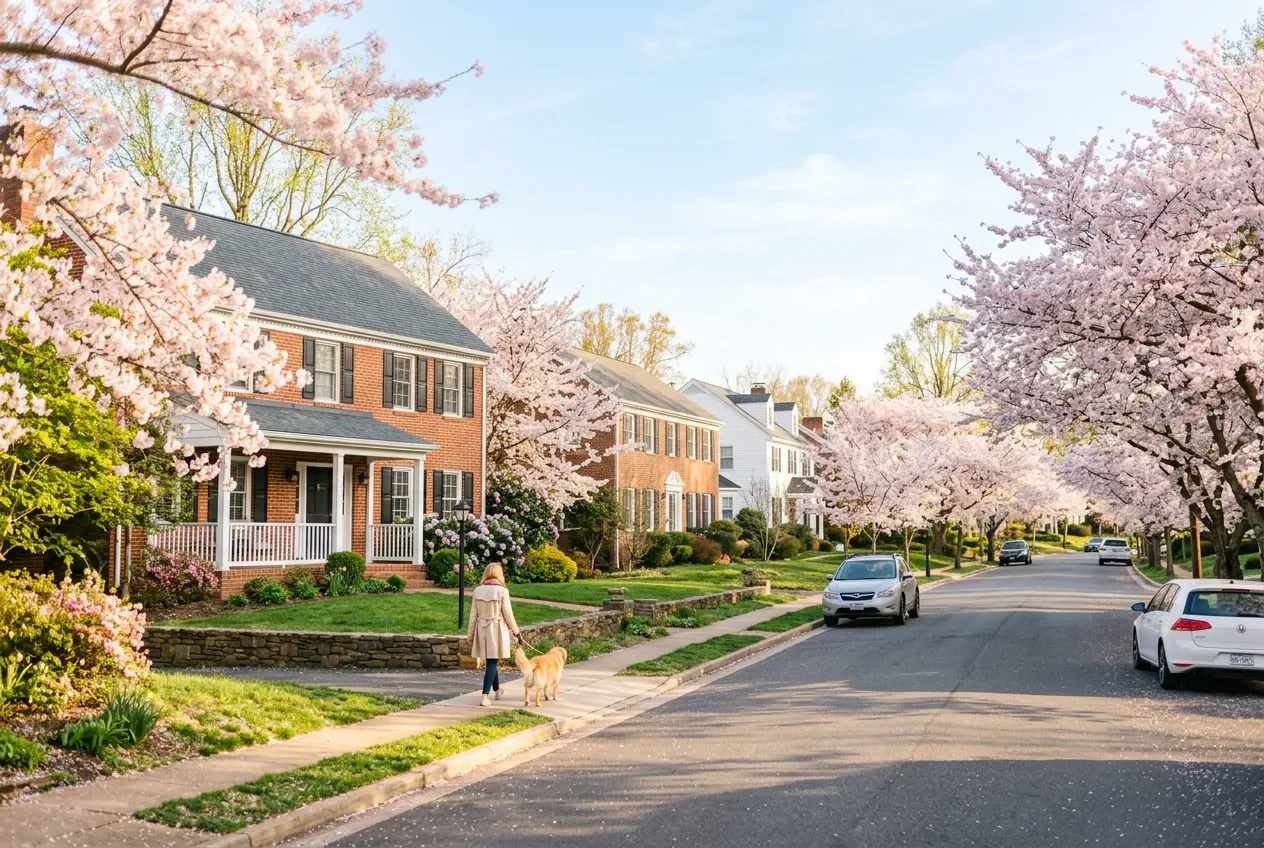
Why local climate data belongs in replacement sizing
Replacement sizing should be based on local design conditions and the house's actual load. A national rule of thumb cannot see Fairfax County humidity, the home's orientation, attic insulation, window quality, duct location, or the way a family uses different rooms. The summer design temperature around 93 degrees and winter design temperatures around 17 to 22 degrees give the calculation a local frame. Manual J fills in the house-specific details.
Design temperature is not the record high or low
Design temperature is a planning value used so equipment can handle nearly all expected weather without being oversized for rare extremes. Oversizing for the hottest afternoon anyone remembers can create short cycles, poor humidity removal, and higher wear. Undersizing can leave the home behind during normal peak weather. The calculation should land between those mistakes.
Service-area focus helps because the same contractor sees how similar designs perform across nearby neighborhoods. If split-level homes in Springfield repeatedly show return-air problems, that pattern informs the inspection. If Lorton pads tilt from soil movement, that becomes part of outdoor equipment review. If Alexandria homes have limited chases, duct feasibility is discussed early. Local data and local field experience work best when paired with measurements in the home.
Permits, climate, and rebates in Fairfax County
We handle the permitting and inspection process for every HVAC installation we perform across Fairfax County and surrounding areas. Replacing an air conditioner, heat pump, or gas furnace requires a building permit under Virginia state code — our Class A license lets us pull mechanical and electrical permits ourselves, with no third-party permit services.
The climate here works equipment hard: Fairfax County averages 36 days above 90 degrees annually, with a summer design temperature of 93 degrees. Systems we specify are sized for those real conditions, not national averages.
Stack your savings: Dominion Energy provides rebates for heat pumps rated 16 SEER2 or higher, Washington Gas has offered rebates for ENERGY STAR-rated gas furnaces, and federal tax credits can apply on top. We’ll show you what your project qualifies for.
Permits and code across the area
HVAC equipment replacement is regulated mechanical work under Virginia's Uniform Statewide Building Code. Replacing an air conditioner, heat pump, or gas furnace is not the same as swapping a portable appliance. The project can involve electrical circuits, refrigerant piping, gas piping, combustion air, venting, condensate drains, equipment platforms, and thermostat controls.
Commonwealth Cooling & Heating holds Virginia Class A contractor licenses with HVAC and electrical designations. Our Class A license allows us to pull mechanical and electrical permits for residential work, and we handle all filings ourselves. We do not use third-party permit services. That matters across the service area because permit records, inspections, and warranty documentation all point back to the contractor responsible for the work.
Why code shows up in comfort conversations
Code compliance and comfort are connected. A furnace vent routed incorrectly can create safety problems. A heat pump installed without proper electrical capacity can nuisance-trip or fail inspection. A condensate drain without proper protection can cause water damage. A replacement that ignores duct static pressure may pass a superficial equipment swap but still leave rooms uncomfortable. Good installation brings those issues into the proposal before work starts.
How to prepare for a local service visit
A little preparation helps the technician spend more time diagnosing and less time hunting for information.
- Confirm the address and community: Include city, zip code, and any access notes for townhomes, gated areas, or parking limits.
- Describe the system type: Say whether you have a gas furnace, heat pump, boiler, central AC, ductless system, or you are not sure.
- Share the symptom timing: Explain if the problem happens at startup, after long runtime, at night, during rain, or only on one floor.
- Clear equipment access: Move storage away from the indoor unit, outdoor condenser, electrical panel, attic hatch, or crawl-space entry if safe to do so.
- Check the filter: Note the filter size and when it was last changed. Do not install a high-MERV filter right before the visit unless that is part of the problem.
- Take thermostat notes: Tell us the setpoint, room temperature, schedule mode, and any error messages.
- Mention recent work: Renovations, insulation changes, new windows, duct work, or thermostat replacement can change system behavior.
- Use the phone for emergencies: If the system is down during severe weather, after hours, or on a weekend, call (703) 436-8028 instead of relying on a form.
Service area FAQ
Commonwealth serves Lorton, Alexandria, Springfield, Fairfax, Burke, Newington, Mount Vernon, Kingstowne, Burke 22015, and Clifton 20124. The company is based in Lorton, so Southern Fairfax County is the center of the service area. If your neighborhood is nearby but not listed, call (703) 436-8028 and the office can confirm coverage.
Yes. Equipment replacement has to comply with Virginia USBC requirements and local inspection processes. Commonwealth holds the Class A license and HVAC and electrical designations needed to pull mechanical and electrical permits for residential work. Permit handling is included in how we plan installations.
House type affects comfort. A pre-1940 Alexandria rowhouse has different constraints than a Springfield split-level or a Lorton townhome. Duct access, return-air paths, attic conditions, insulation, sun exposure, and equipment placement all change the best solution. Local knowledge helps the technician ask better first questions.
Yes. Commonwealth's NATE-certified technicians service all equipment makes and models. Maintenance is often the best way to learn a system's condition before a major repair or replacement decision is needed. The Energy Saver Agreement includes two visits per year, priority scheduling, and a 15% repair discount.
Service records worth keeping
Keep these records with the equipment, regardless of city.
- Permit record: Useful for future sale, inspection, or warranty questions.
- Warranty certificate: Bryant systems need registration within ninety days for the ten-year parts warranty.
- Maintenance readings: Static pressure, amp draw, refrigerant readings, and combustion notes create a useful history.
- Filter details: Size, MERV rating, and change schedule help diagnose airflow complaints later.
- Thermostat notes: Sensor locations, schedules, and staging settings help explain comfort changes between seasons.
- Utility documents: Save rebate paperwork and manufacturer certificates with the proposal.
Your neighborhood is our neighborhood.
Same-day service is often available for Lorton, Alexandria, and Springfield — and fast response everywhere else we serve.