
Heating & air conditioningservices in Springfield.
Commonwealth Cooling & Heating provides HVAC repairs, system replacements, and scheduled maintenance in Springfield, VA. Our NATE-certified technicians reside near Springfield and respond quickly to heating and cooling needs.
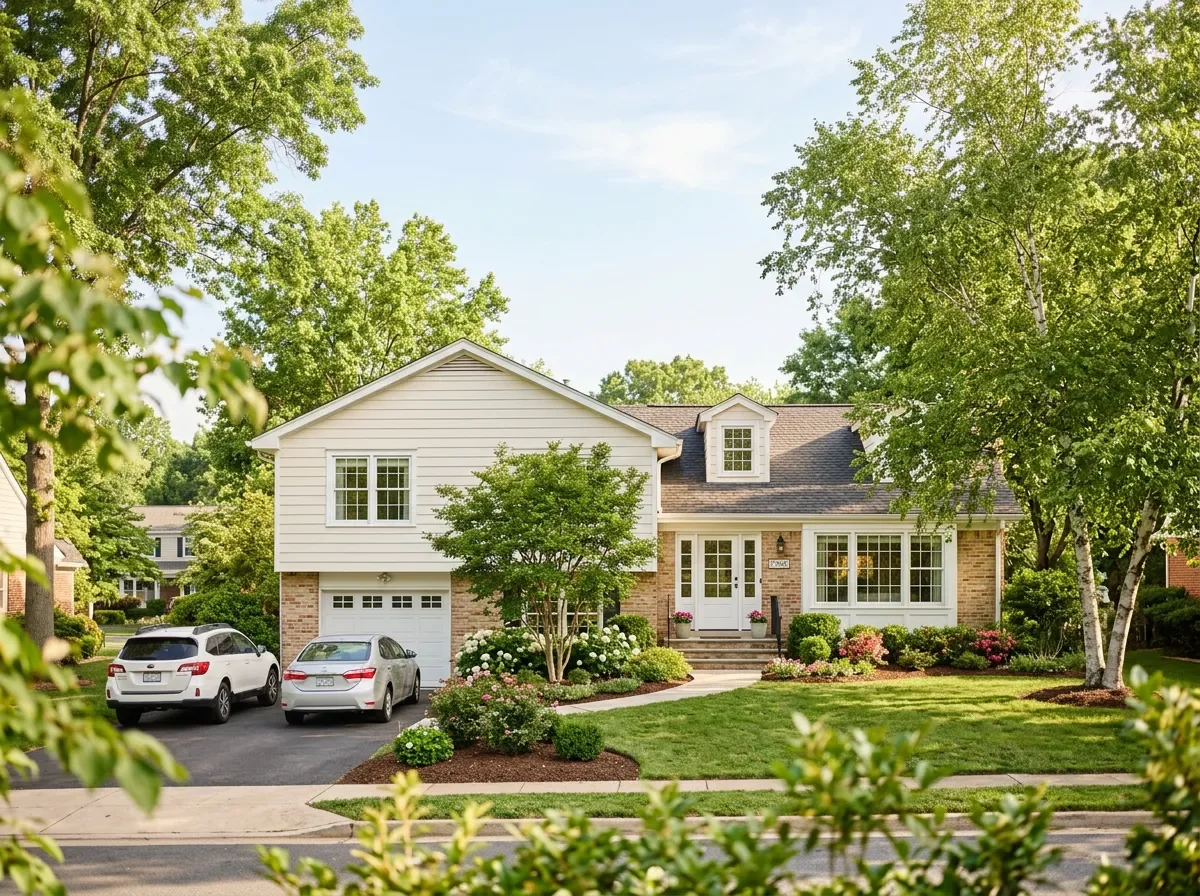 Split-levels off Rolling Road, Springfield
Dependable HVAC services in Springfield VA
We service all major brands of central air conditioners, gas furnaces, heat pumps, and indoor air quality equipment.
- AC repair & maintenance. Troubleshooting, recharges, and coil cleaning for maximum cooling efficiency.
- Heating repair & replacement. High-efficiency Bryant systems sized for multi-level Springfield homes.
- Zoning & balancing. Dampers, sensors, and smart controls that fix hot-upstairs/cold-downstairs syndrome at the source.
“We called Commonwealth Cooling & Heating when our air conditioner failed during a hot afternoon. Their technician arrived within two hours, quickly identified a faulty capacitor, and replaced it. The price was fair, and the service was professional.”
Springfield comfort problems usually involve levels
Springfield includes many homes where the thermostat cannot see the whole house. In 22150, 22151, 22152, and 22153, split-levels, split-foyers, and multi-story homes are common. West Springfield, Saratoga, and Kings Park all include homes where air has to move through half-flights, stair openings, finished lower levels, and upper bedrooms with different sun exposure.
The thermostat sees one wall
The thermostat may be on the main level while the upper bedrooms collect heat in summer and the lower level stays cool. In winter, the lower level may feel cold while the main level is satisfied. That does not always mean the air conditioner or furnace is the wrong size. It may mean the duct system is unbalanced, the return path is weak, the blower speed is wrong, or one thermostat is being asked to average a house that does not behave as one zone.
Springfield calls often start with "the system works, but this floor does not." That is a different diagnostic path than a dead compressor or failed ignitor. We look at airflow, duct layout, static pressure, thermostat location, insulation, sun exposure, and whether zoning is feasible. Sometimes the fix is balancing. Sometimes it is adding return air. Sometimes zoning or a smart thermostat strategy makes sense. The answer should come from measurements, not frustration.
Springfield housing patterns and HVAC needs
Springfield's housing stock creates comfort patterns that show up in service calls.
| Area or Pattern | Typical Comfort Issue | What We Check |
|---|---|---|
| Split-level homes | Upstairs warm in summer, lower level cool or cold | Supply balance, return paths, stairwell stack effect, thermostat location |
| Split-foyer homes | Main level satisfied before bedrooms are comfortable | Duct branch sizing, register airflow, sun exposure, insulation |
| West Springfield | Established homes with aging equipment and ducts | Static pressure, replacement sizing, furnace safety, AC efficiency |
| Saratoga | Multi-level layouts and mixed equipment ages | Zoning options, heat pump setup, filter and return sizing |
| Kings Park | Older homes with possible duct limitations | Duct leakage, airflow balancing, repair-versus-replace decisions |
| Finished basements | Cold lower level in winter, damp feel in summer | Supply and return strategy, humidity, thermostat averaging |
| Additions or bonus rooms | One room always behind | Separate load, duct capacity, ductless support, zoning feasibility |
Springfield maintenance priorities
Multi-level homes benefit from maintenance that checks distribution, not only equipment operation.
- Measure temperature differences by level: Upstairs, main level, and basement readings show whether the complaint is seasonal or constant.
- Check total static pressure: High pressure limits airflow before balancing can help.
- Inspect blower cleanliness: A dirty blower wheel reduces airflow to the farthest rooms first.
- Review filter restriction: A high-MERV filter may worsen weak airflow in upper rooms.
- Test heat pump defrost: Springfield heat pump systems need reliable defrost during cold damp weather.
- Verify auxiliary heat: Backup heat should operate when needed, not run constantly in mild weather.
- Check thermostat staging: Multi-stage and heat pump controls need correct setup.
- Look at return paths: Closed bedroom doors without return air can throw off the whole level.
- Document room complaints: Good notes help compare spring cooling behavior with fall heating behavior.
Answers for Springfield neighbors
Since our technicians reside near Springfield, we typically offer same-day service for emergency cooling or heating failures. Our Springfield dispatch is open for emergency calls 24/7.
We highly recommend Bryant Evolution™ Series systems — variable-speed comfort with top-tier SEER2 and HSPF2 ratings, and strong rebate eligibility.
Yes, our Energy Saver Agreement (ESA) provides two precision tune-ups annually, priority scheduling, and a 15% discount on all repairs.
More Springfield questions
Warm air rises through stair openings, upper floors receive more roof and sun load, and one thermostat often shuts the system off when the main level is satisfied. The fix may involve airflow balancing, return-air improvements, smart sensors, zoning, or duct correction. Equipment replacement alone may not solve it.
They can be, especially when remote sensors show what is happening upstairs or downstairs. Smart controls help most when the system and ducts can respond to the information. If the ductwork cannot deliver enough air to a level, the thermostat will document the problem but not fully fix it.
Often, but not always. The duct layout has to accept dampers, and the equipment has to handle reduced airflow when only one zone calls. Variable-speed equipment can make zoning work better. A technician should measure static pressure and inspect duct access before recommending it.
Commonwealth serves Springfield, including 22150, 22151, 22152, and 22153. The service area also includes nearby Fairfax County communities such as Burke, Newington, Kingstowne, and Lorton.
Split-level homes need split-level thinking
Split-foyer and split-level homes in Springfield often present unique temperature balancing challenges. Multiple floors connected by open stairwells let warm air rise to upper levels while cooler air settles below — a single thermostat in the middle of that stack can’t see the whole picture.
Springfield’s split-levels have three or four living levels connected by half-flights of stairs. Our answer is measured airflow balancing, zoning dampers where the duct layout supports them, and smart sensors that average temperatures across levels — engineering the comfort instead of chasing the thermostat.
Balancing before replacing
A multi-level comfort complaint should not jump straight to equipment replacement. If the system is running safely and producing the right temperature split or temperature rise, the next question is distribution. Air follows the easiest path. If one branch is short and wide while another is long, kinked, or undersized, the easier branch gets more airflow. Rooms farther from the air handler may never catch up.
Static pressure tells the story
Static pressure measures the resistance the blower works against. High static pressure can mean restrictive ductwork, a dirty filter, an undersized return, closed dampers, or a coil packed with debris. If pressure is already high, adding a stronger or larger system may make noise and comfort worse. If pressure is acceptable but branches are uneven, balancing dampers, register adjustments, or duct modifications may help.
Zoning can be useful in Springfield homes, but it has to be designed carefully. Closing dampers to serve one level raises pressure unless the equipment can reduce airflow or the duct design can handle it. Variable-speed Bryant equipment pairs well with zoning because output can adjust to the number of zones calling. In some homes, a smart thermostat with remote sensors is a good first step. In others, the ductwork needs correction before controls can solve anything.
Smart controls for Springfield homes
Smart thermostats are most useful in Springfield homes when they provide better information, not when they are treated as magic. A remote sensor in an upstairs bedroom can reveal how far that room drifts from the main level. Runtime reports can show whether the system runs long enough to remove humidity. Scheduling can reduce conditioning in unused spaces, but only if the duct system and equipment can handle the plan.
Zoning has mechanical limits
True zoning uses dampers, a zone panel, and multiple thermostats or sensors. It can improve comfort in split-level and multi-story homes, especially when paired with variable-speed equipment. The design has to protect airflow. If only one small zone calls and the blower pushes full capacity, static pressure rises. That can create noise, leakage, coil problems, or limit trips. We evaluate duct size, bypass needs, equipment type, and zone load before recommending dampers.
Sometimes the best control upgrade is modest. A properly placed thermostat, corrected staging settings, fan circulation schedule, or sensor averaging can improve comfort without rebuilding ducts. The field measurements decide how far the control strategy should go.
Finished basements change the Springfield load
A finished basement can make a Springfield comfort complaint harder to solve. The lower level is surrounded by ground temperature on several sides, so it often needs less cooling in summer and more careful heating in winter. If it shares one thermostat with the main and upper levels, the system may overcool the basement while trying to satisfy upstairs bedrooms.
Damp does not always mean cold
Basements can feel damp even when they are cool because humidity is the main problem. If the air conditioner short cycles, it may not remove enough moisture. If the fan runs constantly after cooling, moisture on the coil can re-enter the air. If the basement has limited return air, air may stagnate. The fix may involve airflow balancing, thermostat strategy, dehumidification discussion, or duct correction rather than more cooling capacity.
Finished basements also affect heating. Supply registers near the floor may be blocked by furniture. Returns may be missing or poorly located. Doors to mechanical rooms may reduce combustion or service access if changed during renovation. A heating and cooling review should treat the basement as part of the load calculation, not leftover space.
Additions and bonus rooms
Many Springfield homes have additions, enclosed porches, garage conversions, or bonus rooms that were added after the original duct system was designed. These rooms often become the problem space. They may have more glass, different insulation, longer duct runs, or no return path. Connecting a new room to an old trunk line without enough capacity can weaken airflow everywhere.
The first step is to calculate the load of that space separately. Then we look at whether the existing equipment and ductwork can serve it. Sometimes a duct modification is enough. Sometimes a ductless system is cleaner. Sometimes zoning helps if the main system has capacity and the duct layout supports dampers. The wrong answer is to oversize the whole system for one room while making the rest of the house short cycle.
The multi-level service checklist
For hot-upstairs or cold-downstairs complaints, these details help the technician evaluate the whole house.
- List the uncomfortable rooms: Name the floor, room, and time of day when the problem is worst.
- Note sun exposure: Upper bedrooms with afternoon sun may have a different load than shaded rooms.
- Check register positions: Tell us if registers have been closed or blocked to force air elsewhere.
- Find return grilles: Rooms without return paths may pressure up when doors are closed.
- Describe thermostat location: A thermostat near a stairwell, kitchen, or sunny wall may misread the average house condition.
- Mention finished lower levels: Basements and lower-level rooms often need different airflow and humidity strategies.
- Share filter history: A restrictive filter can reduce total airflow and make upper floors worse.
- Avoid guessing equipment size: Larger equipment can short cycle and leave humidity behind if airflow is the actual problem.
For Springfield split-levels, comfort is often a distribution problem before it is a capacity problem. The useful service visit measures airflow, checks return paths, and reviews thermostat location before assuming the outdoor unit or furnace is too small. If one room is always behind, note the time of day, door position, and weather. Those details help separate sun load, duct balance, filter restriction, and control issues. We see this every August in Springfield, especially when upstairs bedrooms carry afternoon heat after the main level has already satisfied the thermostat. Good notes make balancing work faster, clearer, and less speculative for the technician onsite that day.
Need immediate help in Springfield?
Our Springfield dispatch is open for emergency calls 24/7 — nights, weekends, and holidays included.