
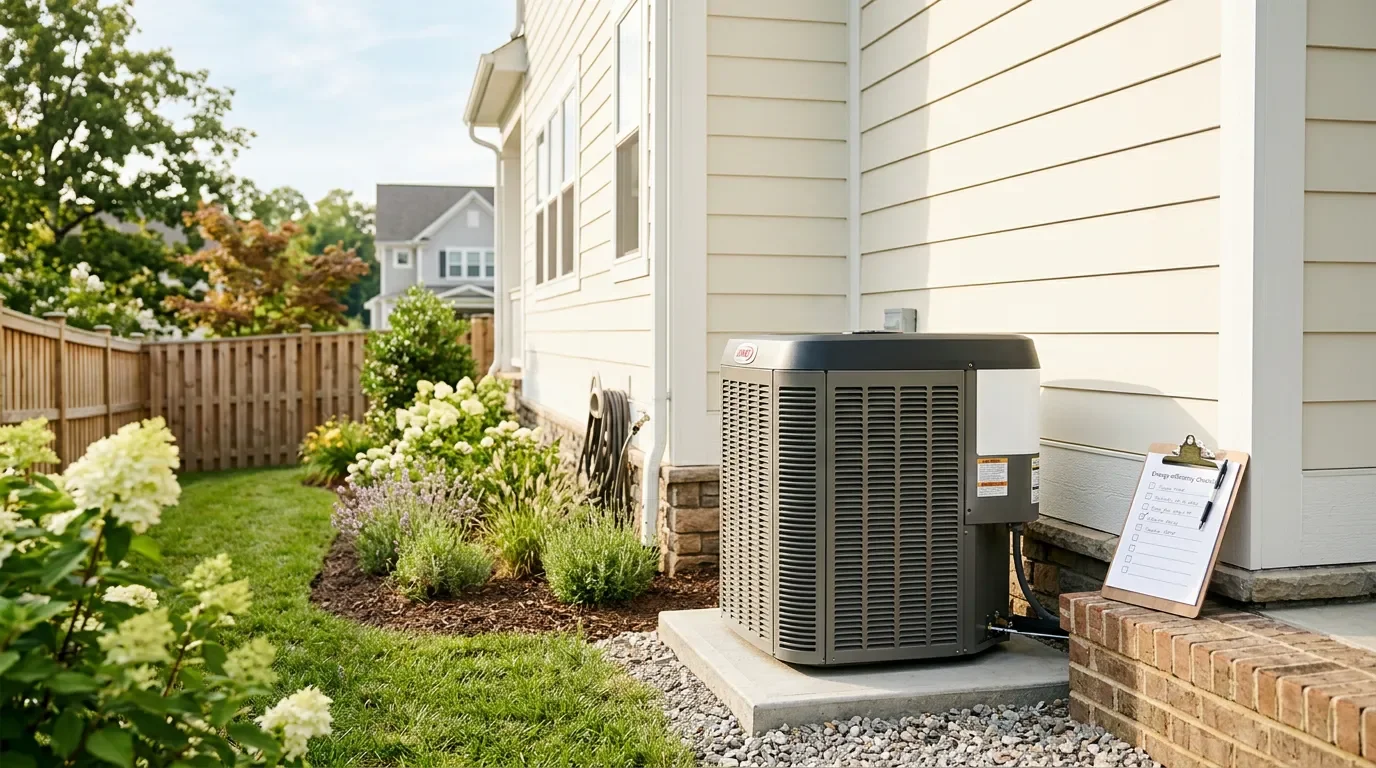
The Department of Energy updated the efficiency testing standards for residential air conditioning systems and heat pumps. This update introduced the SEER2 (Seasonal Energy Efficiency Ratio 2) rating scale, replacing the older SEER scale. For homeowners in Lorton, Alexandria, and Springfield, VA, understanding these standards is important when planning a system replacement.
The Physics of SEER vs. SEER2 Testing
The original SEER rating scale was developed decades ago. It evaluated air conditioner efficiency under lab conditions that did not reflect real-world duct systems. Specifically, the old test assumed a duct static pressure of 0.1 inches of water column.
In actual residential installations, static pressure is almost always higher. The average home duct system has a static pressure closer to 0.5 inches of water column, caused by bends in the ducts, air filter resistance, and registers. High static pressure forces the blower motor to work harder, reducing the system's actual operating efficiency.
To address this gap, the SEER2 testing standard requires manufacturers to test equipment at a minimum static pressure of 0.5 inches of water column. This change represents real-world operating conditions. Because the test is harder, a system's SEER2 rating is typically 4.5% lower than its old SEER rating. For example, a system that rated at 15 SEER under the old test will rate at approximately 14.3 SEER2 under the new standard.
This pressure difference is significant. High static pressure causes the blower motor to draw more electrical current. It also increases the temperature of the motor windings, which can shorten the motor's lifespan. By testing systems at 0.5 inches of water column, manufacturers must design more efficient blower motors, such as electronically commutated motors (ECM), which adjust their speed to maintain proper airflow under higher pressure.
Regional Requirements for Northern Virginia
The Department of Energy enforces different minimum efficiency standards based on geographic region. Virginia falls into the Southeast region. In our area, all residential split-system air conditioners installed must meet a minimum efficiency of 14.3 SEER2 (which corresponds to 15 SEER under the old scale).
For heat pumps, the standards are uniform nationwide. All new split-system heat pumps must meet a minimum efficiency of 14.3 SEER2 and an HSPF2 (Heating Seasonal Performance Factor 2) of 7.5.
We help homeowners select systems that meet or exceed these requirements. Upgrading from an older, failing system (often operating at 10 SEER or less) to a modern 14.3 SEER2 system can lower cooling energy consumption by 30% or more.
Meeting these regional standards requires matching the indoor coil with the outdoor unit. In the past, installers would sometimes replace only the outdoor condenser, leaving the old indoor evaporator coil in place. This practice prevents the system from achieving its rated SEER2 efficiency. We always install matched systems certified by the Air-Conditioning, Heating and Refrigeration Institute (AHRI), ensuring you receive the full efficiency benefit.
Efficiency Terms in One Place
These labels often appear together on replacement proposals.
| Rating | Applies To | What It Tells You |
|---|---|---|
| SEER2 | Air conditioners and heat pumps | Seasonal cooling efficiency under updated test conditions. |
| EER2 | Air conditioners and heat pumps | Cooling efficiency at a specific high-load operating point. |
| HSPF2 | Heat pumps | Seasonal heating efficiency for heat pump operation. |
| AFUE | Furnaces and boilers | Percentage of fuel converted into usable heat over a season. |
Rebates, Tax Credits, and Long-Term Savings
While high-efficiency systems have a higher upfront cost, several financial incentives help offset the initial investment. The federal Energy Efficient Home Improvement Credit (Section 25C) allows homeowners to claim a tax credit of 30% of the cost, up to $2,000, for installing a qualifying high-efficiency heat pump.
For split-system air conditioners, a tax credit of up to $600 is available for units that meet specific efficiency tiers. Local utility providers, including Dominion Energy, also offer rebates for installing energy-efficient systems that help lower peak demand on the electrical grid.
We recommend variable-speed heating and cooling systems for maximum savings. These systems adjust compressor speed in small increments, allowing the unit to run at a lower, more efficient capacity during mild weather. This steady operation reduces energy spikes, maintains balanced temperatures, and improves humidity control.
Variable-speed compressors use inverter technology to convert incoming AC power to DC power, adjusting the motor frequency to vary the speed. This allows the system to run at speeds as low as 25% capacity, matching your home's exact cooling needs.
Our team provides the necessary documentation and manufacturer certification statements to ensure your installation qualifies for all eligible federal tax credits and local utility rebates. We handle the submission process to make the transition simple for you.
Thermodynamics of Airflow and Sensible Heat Ratio
Understanding air conditioner efficiency requires looking at the sensible heat ratio (SHR). Sensible heat is the temperature change you can read on a thermometer. Latent heat is the moisture removed from the air.
In Northern Virginia, high summer humidity requires a system with a low sensible heat ratio. This means a larger portion of the cooling capacity is spent removing moisture. If your system is too large, it satisfies the thermostat quickly without running long enough to condense moisture on the evaporator coil.
Variable-speed blower motors improve dehumidification by running at a lower speed for longer periods. This allows the air to pass over the cold coil slowly, maximizing latent heat removal and keeping your home's humidity level comfortable.
Inverter Compressor Control Systems
Bryant Evolution variable-speed air conditioners use inverter control boards to manage the compressor. The board monitors communication signals from the Evolution Connex thermostat, checking indoor temperature, outdoor temperature, and humidity levels.
Based on this data, the inverter varies the frequency of the DC power sent to the compressor motor. This active adjustments ensure that the system maintains your set temperature down to a fraction of a degree.
We program these communication parameters during installation, ensuring that the control system operates in harmony with your home's layout.
The M1 Testing Standard and What Changed
The shift from SEER to SEER2 is tied to a specific change in testing procedure called the M1 blower-only test method. Under the older standard, lab technicians measured system performance with external static pressure set artificially low. The M1 method raises that test pressure to 0.5 inches of water column, as mentioned above, but it also changes how the blower motor is evaluated during cooling-only operation.
Under M1, the indoor blower must deliver rated airflow against the higher static pressure without assistance from external test fans. This means the blower motor's watt draw is now included in the efficiency calculation at a realistic load. Systems with older PSC (permanent split capacitor) blower motors lose efficiency under this test because PSC motors draw more power as static pressure increases. Systems equipped with ECM or variable-speed motors perform better because they adjust automatically.
For homeowners, the practical result is simple: a SEER2 rating gives you a more honest picture of what the system will do once it is installed in your home with real ductwork.
SEER2 moved the lab test closer to duct conditions. It still cannot see duct leakage, filter choice, return sizing, thermostat placement, or humidity load. Treat SEER2 as one input, then verify the installation can deliver the rating.
Regional SEER2 minimums across the country
The Department of Energy divides the country into three climate regions for air conditioner efficiency standards: North, Southeast, and Southwest. Northern Virginia falls in the Southeast region, which requires a minimum of 14.3 SEER2 for split-system air conditioners (equivalent to 15 SEER on the old scale).
By contrast, homes in the North region (states like New York, Ohio, and Michigan) only need to meet a minimum of 13.4 SEER2 for split-system air conditioners. The Southwest region, covering states like Arizona and Nevada, also requires 14.3 SEER2 but adds a minimum EER2 (Energy Efficiency Ratio 2) of 11.7 to account for the extreme dry heat in that area.
If you purchase a system online or from an out-of-state supplier, make sure it meets the Southeast region minimum. We have seen cases where homeowners purchased a unit rated for the North region, which did not meet Virginia's minimum. In that situation, the installation cannot pass local code inspection.
Equipment labeling under SEER2
New equipment now carries updated EnergyGuide labels displaying the SEER2 rating instead of the old SEER number. You will notice that the numbers on these labels look lower than what you may have seen in the past. A system labeled 15.2 SEER2, for example, would have been labeled approximately 16 SEER under the old standard. The equipment did not get worse. The test got harder and more realistic.
AHRI reference numbers on the yellow EnergyGuide label also changed. When we quote a system, we provide the specific AHRI-certified combination number that confirms the indoor coil, outdoor unit, and furnace or air handler are tested and rated together. This is the only way to verify the published SEER2 rating applies to your installation.
How to Compare SEER2 Quotes
A SEER2 quote should identify the exact equipment combination, not only a headline efficiency number. The outdoor unit, indoor coil, furnace or air handler, blower type, and controls all affect the certified rating. Ask for the AHRI reference number when efficiency is part of the proposal. That number confirms the listed components were tested together.
The next question is ductwork. SEER2 is a better test than old SEER because it uses more realistic static pressure, but the installed system still has to move air through your ducts. If the return is undersized, the filter is restrictive, or the supply ducts are leaking, the rated equipment cannot perform as advertised. A higher SEER2 unit connected to poor airflow may cost more without solving the comfort problem.
Also compare staging and humidity control. A single-stage 14.3 SEER2 system may meet the regional minimum. A two-stage or variable-speed system may run longer at lower output, improving humidity removal during Northern Virginia summers. The best quote explains why the selected efficiency tier fits your house, not only why the equipment is efficient in a brochure.
How SEER2 affects Bryant product lines
As a Bryant Factory Authorized Dealer, we carry their full lineup of SEER2-rated equipment. Bryant redesigned several product families to meet and exceed the new standards. The Evolution series tops out at up to 24 SEER2, using variable-speed inverter compressors and variable-speed blower motors. The Preferred series offers mid-range options around 16 to 17 SEER2 with two-stage compressors.
The Legacy line covers the entry-level segment, meeting the 14.3 SEER2 minimum with single-stage compressors and ECM blower motors. Even at the base tier, Bryant equips these units with ECM motors rather than PSC motors, which helps maintain efficiency under the tighter M1 test conditions.
We walk homeowners through the tradeoffs between these tiers during our in-home consultations. A higher SEER2 rating means lower monthly energy bills, but the upfront cost is higher. For most homes in Northern Virginia running air conditioning from May through September, a system in the 16 to 18 SEER2 range often provides the best balance of purchase price and operating savings over a 15 to 20-year equipment life.
SEER2 FAQ
Not always. Payback depends on runtime, utility rates, duct condition, installation quality, humidity control, incentives, and how long you plan to stay in the home. Higher efficiency can be valuable, but it should be compared against comfort gains and total installed cost.
SEER2 uses a tougher test with higher external static pressure, so the published number often looks lower than the old SEER equivalent. The equipment did not become less efficient. The test became more realistic.
It meets the Southeast regional minimum for split-system air conditioners, but "enough" depends on the homeowner's goals. Many homes benefit from higher-efficiency or staged equipment for comfort, humidity control, and operating cost. The house and ductwork should guide the decision.
SEER2 Quote Checklist
A clear replacement proposal should answer these points.
- AHRI match: The indoor and outdoor sections should be listed as a certified combination.
- Manual J load: The proposed capacity should come from the home's calculated load.
- Duct static pressure: Airflow should be measured or evaluated before final equipment selection.
- SEER2, EER2, and HSPF2: Heat pump proposals should show both cooling and heating efficiency.
- Humidity strategy: Ask how the system will handle latent load during humid summer weather.
- Thermostat and controls: Staging, communicating controls, and fan settings affect comfort and efficiency.
- Permit handling: Equipment replacement has to meet Virginia code requirements.
- Incentive documentation: Qualifying equipment should come with the documentation needed for rebates or tax credits.
Need a hand? Talk to a NATE-certified technician about your system — call (703) 436-8028 or schedule service online.