
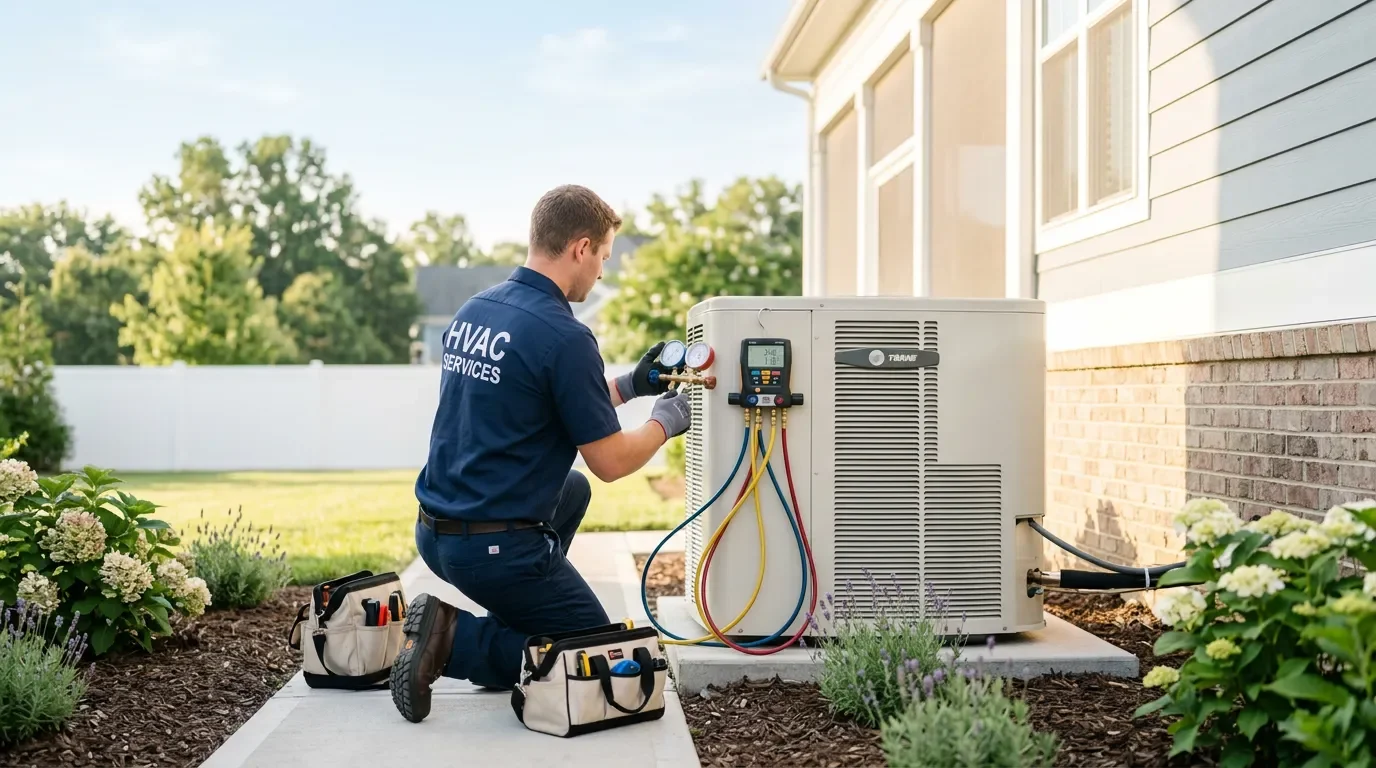
Many homeowners view seasonal HVAC maintenance as an optional service call. However, regular tune-ups are important for preserving system efficiency, preventing unexpected equipment failures, and extending the lifespan of your heating and cooling investment.
The Chemistry and Physics of Coil Cleaning
An air conditioner operates by transferring heat between the indoor air and the outdoor air. This transfer occurs across the aluminum fins of the evaporator and condenser coils.
Over time, dust, pollen, and dirt accumulate on these coils. This dirt insulates the metal, restricting heat transfer. It forces the refrigerant to run at higher pressures and temperatures, reducing cooling capacity and increasing energy consumption.
For example, a thin layer of dust on the indoor coil can reduce system efficiency by 15% or more. During our tune-ups, we clean these coils using specialized cleaners that remove dirt without damaging the fins, ensuring optimal heat transfer and airflow.
We also clean the condensate drain pan and drain line. As moisture condenses on the evaporator coil, it drains into a plastic pan and flows outside. Algae and dust can clog this line, causing the pan to overflow. This leads to water damage in your ceiling or crawl space. We flush the drain line with water and use biological tablets to prevent algae buildup.
Monitoring Electrical Components and Capacitor Health
Electrical issues cause many air conditioner failures during hot summer weather. The compressor and fan motors rely on dual-run capacitors to start and run.
Capacitors store electrical energy and discharge it to assist the motor. Over time, heat and electrical stress cause capacitors to lose their capacitance, which is measured in microfarads. If a capacitor's microfarad rating drops by more than 10% below its design specification, the motor will struggle to start, drawing more current and eventually burning out its windings.
We measure capacitance during our tune-ups. Identifying a weak capacitor allows us to replace it before it fails, preventing a system breakdown on a hot summer afternoon and protecting the expensive compressor motor from damage.
We also check the electrical contacts in the contractor box. High voltage arcs across the copper contacts when the system turns on, creating carbon pitting. If the contacts pit, electrical resistance increases, which drops the voltage supplied to the compressor and can cause the contacts to weld together, forcing the system to run continuously.
Preserving Manufacturer Warranties
Most major HVAC manufacturers, including Bryant, require proof of annual professional maintenance to keep the parts warranty valid. If a compressor or heat exchanger fails, the manufacturer may request service records to verify the system was maintained correctly.
Our Energy Saver Maintenance Agreements provide this verification, keeping your ten-year parts warranty active. We perform spring cooling tune-ups and autumn heating tune-ups, ensuring your system operates efficiently year-round.
We document all test measurements, including refrigerant charge, static pressure, and motor amp draws, providing you with a complete technical record after every visit.
Thermal Imaging Diagnostics
Loose electrical connections create localized heat because of electrical resistance. If left unresolved, these loose wires melt, creating open circuits and presenting fire safety risks.
During our inspections, we use thermal imaging cameras to inspect high-voltage lines inside disconnect boxes and contactors.
This thermal scan identifies loose terminals immediately, allowing us to tighten the connections and check system safety controls.
Compressor Winding insulation testing
Compressor motor windings are coated in varnish insulation. Over time, high operating temperatures and acidic oil degrade this insulation, leading to ground faults and compressor burnout.
We test the resistance of the compressor insulation using a megohmmeter (megger test). This diagnostic test applies high DC voltage to the windings, measuring resistance in megohms.
A drop in insulation resistance alerts us to future compressor failures, allowing you to plan upgrades before a system breakdown occurs.
Seasonal maintenance timing in Virginia
Northern Virginia has distinct heating and cooling seasons that each put different demands on your HVAC equipment. We schedule cooling tune-ups between March and May, before the summer heat arrives. Heating tune-ups are scheduled between September and November, before the first hard freeze.
Timing matters because problems found during a tune-up are easier and cheaper to fix before the busy season. If a capacitor is weak in April, we replace it in 20 minutes during your scheduled visit. If that same capacitor fails on a 98-degree July afternoon, you may wait days for an emergency repair while your house heats up. Scheduling maintenance during the shoulder seasons also means our technicians have more time to perform a thorough inspection rather than rushing between emergency calls.
Virginia's climate also creates specific wear patterns. Our high summer humidity causes condensate drain issues and coil corrosion. The freeze-thaw cycles from December through March stress heat pump defrost boards and reversing valves. Catching these problems early prevents more expensive repairs.
What our technicians check during a cooling tune-up
A cooling season tune-up follows a structured checklist. Our NATE-certified technicians inspect and test each of these items:
Refrigerant charge is measured using superheat and subcooling calculations. Superheat is the temperature difference between the refrigerant leaving the evaporator and its boiling point at the measured suction pressure. Subcooling is the temperature difference between the liquid refrigerant leaving the condenser and its condensing point at the measured discharge pressure. Correct superheat and subcooling values confirm the system has the right amount of refrigerant. An overcharged system runs at high head pressure and wastes energy. An undercharged system starves the evaporator and reduces cooling output.
The technician also measures the temperature split across the evaporator coil. The return air temperature minus the supply air temperature should fall between 16 and 22 degrees Fahrenheit, depending on indoor humidity. A temperature split outside this range points to airflow problems, refrigerant issues, or a dirty coil.
Amp draws on the compressor and fan motors are checked against the manufacturer's rated load amps (RLA) and locked rotor amps (LRA). A compressor drawing amps above its RLA is working too hard, often because of a dirty condenser coil or a refrigerant overcharge. A compressor drawing significantly below its RLA may have a weak valve or low refrigerant.
Static pressure across the air handler is measured using a manometer. Total external static pressure above 0.5 inches of water column indicates restricted ductwork, a clogged filter, or an undersized return. High static pressure forces the blower to work harder and reduces airflow across the evaporator, hurting efficiency and comfort.
How to Read a Maintenance Report
The measurements on a maintenance report are most useful when you understand what direction they are moving. One reading by itself tells us what happened that day. Repeated readings show a trend. If static pressure rises from one spring visit to the next, the filter, coil, blower wheel, or duct system deserves closer attention. If a capacitor tests within range but lower than the previous year, it may still run today while giving us a reason to watch it before peak heat.
Good maintenance records also separate normal aging from a developing failure. A compressor may draw slightly different amperage as outdoor temperature changes, so the number has to be read in context. Refrigerant readings change with indoor load, outdoor temperature, airflow, and metering device type. Temperature split changes with humidity. The value of the report is that it gives the technician a technical memory of the system instead of starting from zero every season.
For homeowners, the best question is not "Is everything fine?" It is "Did anything change since the last visit?" That question leads to better decisions. A small change may call for cleaning or adjustment. A repeated trend may suggest planning for a repair. A major reading outside specification may explain why the system has become noisy, inefficient, or unreliable.
Heating tune-up measurements
During a fall heating tune-up on a gas furnace, the technician performs combustion analysis. A combustion analyzer measures the flue gas temperature, oxygen content, carbon monoxide concentration, and carbon dioxide levels. From these measurements, we calculate the actual combustion efficiency, which tells us whether the burners are firing cleanly and the heat exchanger is transferring heat properly.
Carbon monoxide readings above 100 parts per million in the flue gas indicate incomplete combustion. This can result from a cracked heat exchanger, a dirty burner, or insufficient combustion air supply. Any high CO reading triggers an immediate shutdown and further inspection.
For heat pump systems, the heating tune-up includes checking the defrost control board, reversing valve operation, and auxiliary heat strip function. We verify the defrost cycle initiates at the correct outdoor coil temperature and terminates after the ice has cleared. A defrost board that cycles too often wastes energy. A board that does not cycle often enough allows ice to build up and block airflow through the outdoor coil.
Maintenance Measurements and What They Tell Us
These readings help turn a tune-up into a documented condition report.
| Measurement | What It Shows | Why It Matters |
|---|---|---|
| Total external static pressure | Resistance to airflow through the system | High pressure can strain the blower, reduce comfort, and freeze coils. |
| Temperature split | Difference between return and supply air in cooling mode | Readings outside the expected range point toward airflow, refrigerant, or coil problems. |
| Temperature rise | Furnace supply temperature minus return temperature | A rise outside the furnace rating can indicate airflow or combustion issues. |
| Capacitor microfarads | Whether a motor-starting capacitor is within tolerance | Weak capacitors are common causes of summer breakdowns. |
| Motor amp draw | Electrical load on blower, condenser fan, or compressor motors | Excessive draw can indicate stress, failing bearings, dirty coils, or electrical issues. |
| Superheat and subcooling | Refrigerant behavior under operating conditions | These values help confirm charge and metering performance. |
| Combustion readings | Flue gas, oxygen, carbon monoxide, and efficiency behavior | Gas furnaces need safe, clean combustion and proper venting. |
How our maintenance agreements work
Our Energy Saver Maintenance Agreement includes two visits per year: one in spring for cooling and one in fall for heating. Each visit covers the full inspection checklist described above, along with coil cleaning, drain line flushing, and filter replacement.
Agreement members receive priority scheduling during peak season. When summer demand is high and our emergency schedule fills up, agreement customers are moved to the front of the line. This can mean the difference between a same-day repair and a two-day wait.
Members also receive a 15% discount on repair parts and labor for any issues found outside the tune-up scope. If a blower motor or compressor contactor needs replacement, you pay less than a non-member customer for the same repair.
The agreement fee pays for itself in most cases. The two tune-up visits alone, if purchased individually, would cost more than the annual agreement price. Add in the parts discount and priority scheduling, and the agreement becomes an easy decision for homeowners who want to keep their systems running well and avoid surprise breakdowns.
We send a reminder when your tune-up is due, so you do not need to track the schedule yourself. Our office contacts you by phone or email about four to six weeks before the seasonal window opens, and we schedule your visit at a time that works for you.
Small Problems Worth Fixing Early
Several maintenance findings are inexpensive compared with the failures they can prevent.
- Weak capacitor: Replacing it early can protect the compressor or fan motor from hard starts.
- Dirty condenser coil: Cleaning restores heat rejection and lowers head pressure during hot weather.
- Slow condensate drain: Clearing it before summer reduces the risk of overflow and water damage.
- Loose electrical terminal: Tightening it prevents heat buildup, arcing, and nuisance shutdowns.
- Restrictive filter: Correcting the filter protects airflow, coil temperature, and furnace temperature rise.
- Misprogrammed thermostat: Proper staging, fan settings, and schedules can reduce runtime and comfort swings.
Maintenance FAQ
Many failures begin while the system still appears normal. A capacitor can weaken, a drain can start to clog, static pressure can rise, or a contactor can pit before the homeowner notices a comfort problem. Maintenance is the chance to find those changes while the system is still operating.
A heat pump works in both heating and cooling seasons, so two visits are better. The Energy Saver Agreement includes a spring cooling tune-up and a fall heating inspection. That timing lets the technician check refrigerant behavior, condensate, defrost, auxiliary heat, electrical components, and airflow before each hard season.
Yes. Major manufacturers may ask for proof that equipment was maintained. Commonwealth documents readings such as refrigerant charge, static pressure, and motor amp draw. Those records help show that the system was professionally serviced, which can matter if a compressor, heat exchanger, or other major component fails.
Need a hand? Talk to a NATE-certified technician about your system — call (703) 436-8028 or schedule service online.